你是不是花了几个月背题库,一看到关于卫生消毒的题目还是一脸懵?特别是关于标准预防措施的问题,很多英文不好的考生总觉得戴手套就是万能答案,结果次次选错。
你每天在那个小房间里工作,手法好,客人也喜欢你。但只要有人问你一个专业问题,或者考官换个问法,你就不知道该怎么回答了。你不是不努力,是没有人告诉你,这些规矩背后的逻辑是什么。你要明白,通过按摩联邦考试拿到执照,不只是为了那张纸,更是为了让你在美国成为一个真正的专业人士。
什么是标准预防措施(Standard Precautions)?
标准预防措施是指一种假设,即假设每个人的体液都具有潜在的传染性。就像你从超市买回来的菜,不管看起来多干净,你都会先洗一下。你洗菜不是因为你知道那棵菜一定有细菌,是因为你假设它可能有。这种对事不对人的预防逻辑,就是卫生安全的核心。
在工作中,这种措施不针对某个特定的病人,而是针对所有人。如果你还没看过我们关于三选一题型解析的讲解,建议先读一读。搞清楚基本概念,才能看透考题的伪装。
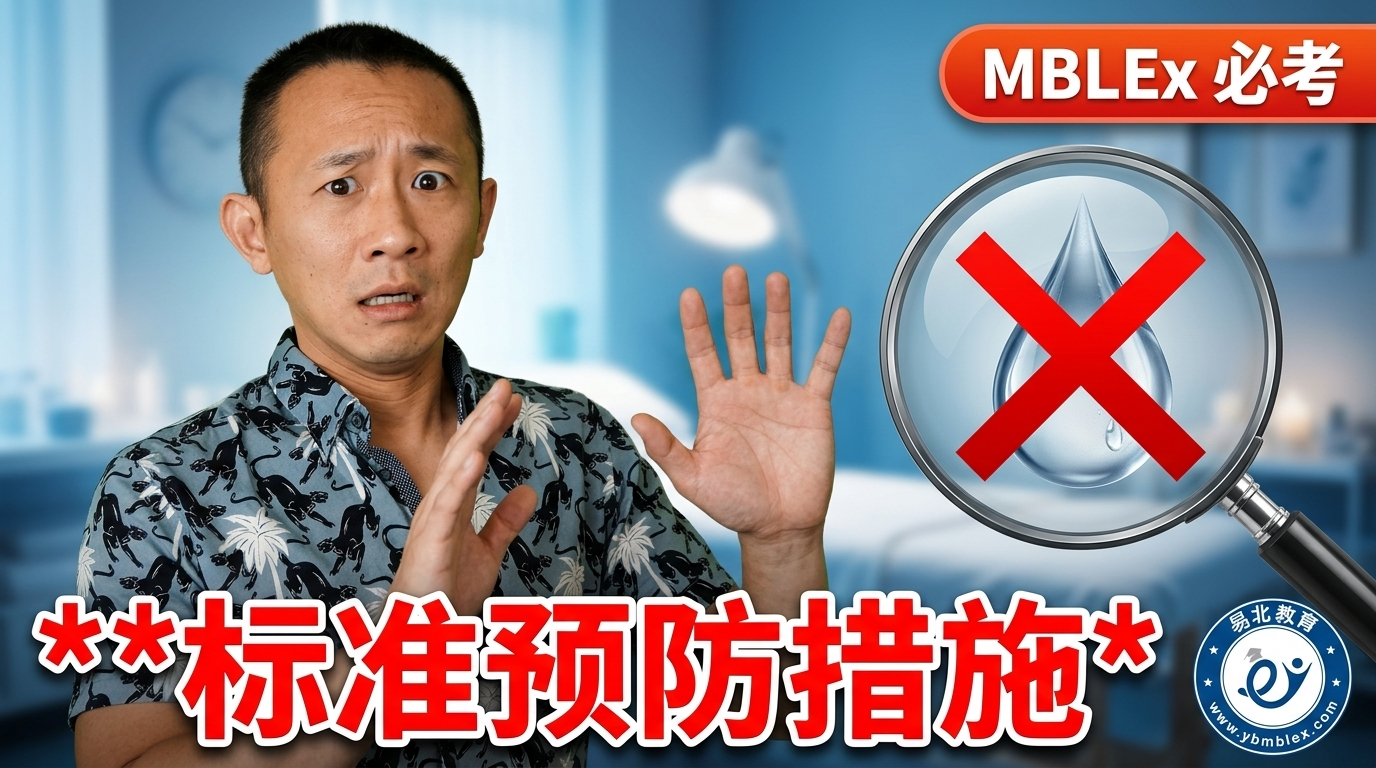
考试重点:标准预防措施适用于血液、所有体液(分泌物和排泄物),但不包括汗水(Sweat)。记住这个排除项,能帮你躲过很多坑。
黄金判定公式:你在保护谁?
区分标准预防措施和OSHA(职业安全与健康管理局)标准,只需要问自己一个问题:这个动作是为了保护谁?
如果你的动作是为了保护客人和工作环境,比如勤洗手、更换床单,那它就属于标准预防措施。手部卫生(Hand Hygiene)是预防感染扩散最重要的手段,必须在按摩前后都执行。如果你对职业合同或法律身份有疑问,可以参考我们关于W2和1099区别的文章。
相反,如果这个动作是为了保护你这个劳动者,比如老板必须提供安全帽或洗眼站,那就是OSHA的安全标准。张老师在视频中用了一个超直观的比喻来解释这个概念,强烈建议看一遍 👇
🎬 张老师视频讲解
文字看不够?视频里有更详细的讲解、记忆口诀和真题演练
⬆️ 点击播放,跟着张老师一起学
真题演练:考官最爱的汗水陷阱
来做一道真题练习:According to standard precautions, which of the following is the most important practice for a massage therapist to prevent the spread of infection? (根据标准预防措施,按摩师预防感染扩散最重要的做法是什么?)
选项有:A. 戴口罩;B. 杀菌按摩床;C. 按摩前后洗手;D. 每次都戴手套。很多人会选D,觉得保护得越多越好。但逻辑是:只有接触非完整皮肤或体液时才强制戴手套。而标准预防措施最强调的是手部卫生。正确答案是C。
如果你分不清这些细节,不是因为你英文差,是因为没有人把这个逻辑教给你。这种判断逻辑,是可以被系统训练出来的。而这正是我们十多年在做的事。你可以通过我们关于关节活动度的分析,感受一下这种逻辑推导的魅力。
常见问题 FAQ
Q: 标准预防措施是否包括汗水?
Q: 预防感染扩散最有效的方法是什么?
Q: 什么时候必须佩戴手套?
✅ 本文要点回顾
- 标准预防措施假设所有人都有传染风险。
- 洗手(Hand Hygiene)是预防感染的重中之重。
- 判定公式:保护客人选预防措施,保护工人选OSHA。
- 陷阱提醒:汗水(Sweat)不属于标准预防措施范围。
张维麟(Weilin Chang)
易北教育创始人,按摩联邦考试辅导专家。已帮助超过六百三十位华人通过了按摩联邦考试。专注于用中文教学帮助英文零基础、年纪大的在美华人突破语言障碍,轻松备考。
Understanding Standard Precautions for MBLEx: A Comprehensive Guide
In the field of massage therapy, infection control is a critical component of professional practice. The 按摩联邦考试 frequently tests candidates on their knowledge of 标准预防措施 (Standard Precautions) and OSHA regulations. Understanding the nuances of these protocols is not only essential for passing the exam but also for maintaining a safe and professional work environment.
标准预防措施 (Standard Precautions) represent a set of infection control practices used to prevent the transmission of diseases that can be acquired by contact with blood, body fluids, non-intact skin, and mucous membranes. These measures are based on the principle that all blood and body fluids are potentially infectious. At YiBei Education (易北教育), we emphasize that students must treat every client as a potential source of infection to ensure universal safety.
Key components of 标准预防措施 include hand hygiene, the use of Personal Protective Equipment (PPE), respiratory hygiene, and proper disposal of sharps. Hand hygiene is considered the most important practice for preventing the spread of infection. Massage therapists should wash their hands thoroughly before and after every session, regardless of whether gloves were worn.
When preparing for the 按摩联邦考试, students often confuse Standard Precautions with OSHA standards. OSHA, or the Occupational Safety and Health Administration, focuses on the safety of the worker. Standard Precautions, while also protecting the worker, are primarily designed to prevent the cross-contamination between patients and the environment. If the practice is mandatory for the employer to provide for the employee’s safety, it likely falls under OSHA.
One major area of confusion on the exam is the inclusion of sweat. Under the guidelines for 标准预防措施, sweat is specifically excluded. This means that while blood, semen, vaginal secretions, and even saliva are considered potentially infectious, sweat is not. Recognizing this distinction is a common trick used in 按摩联邦考试 questions. Students at YiBei Education (易北教育) are trained to look for these specific keywords to identify trap options.
PPE, such as gloves, should be used when contact with blood or body fluids is anticipated. However, wearing gloves for every single massage session is generally not required unless the therapist has cuts on their hands or the client has broken skin. Over-reliance on gloves without proper hand washing is a frequent error in clinical practice and on the exam.
Another important aspect of infection control is the distinction between cleaning, disinfecting, and sterilizing. Cleaning involves the physical removal of dirt and debris. Disinfecting uses chemicals to kill most microorganisms on non-porous surfaces. Sterilizing is the complete destruction of all microbial life. Most massage environments focus on sanitation and disinfection rather than sterilization, which is typically reserved for surgical instruments.
In conclusion, mastering 标准预防措施 requires a deep understanding of the underlying logic: protection through assumption. By assuming everyone is a potential carrier, we create a standardized wall of defense. At YiBei Education (易北教育), we have helped over 630 students navigate these complex topics by providing clear, logical frameworks that transcend language barriers. Success on the 按摩联邦考试 is within reach when you stop memorizing and start understanding.
先看懂整场考试:这个考点属于 MBLEx 的考试范围。如果你还不确定按摩联邦考试到底考什么、怎么计分、报名要多少钱,建议先读这篇 按摩联邦考试(MBLEx)完全指南。