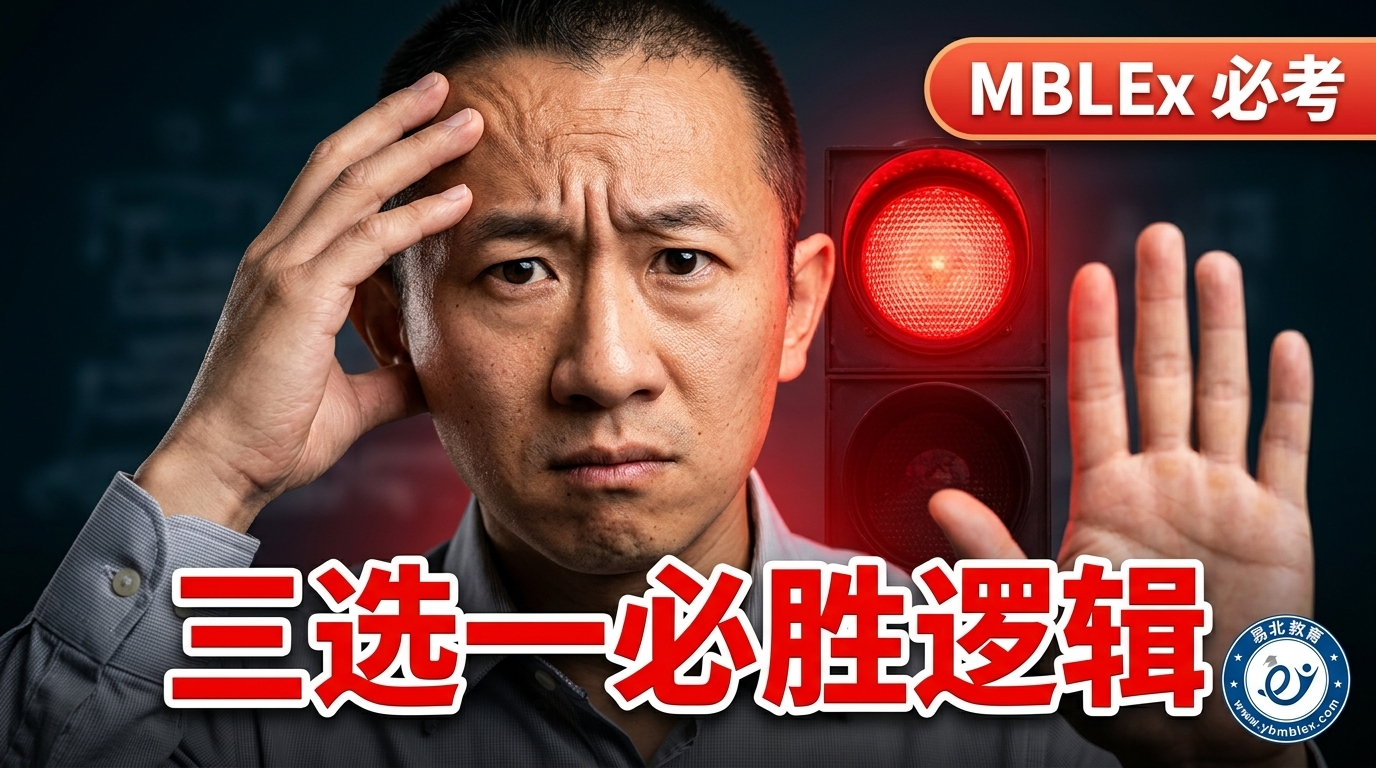
面对三选一新题型的心理困境
你是不是在备考过程中发现,按摩联邦考试的题目正在悄悄发生变化?尤其是这种全新的三选一题型解析,让很多习惯了排除法的考生感到不知所措。这种变化不是为了增加难度,而是考官在筛选真正具备职业判断力的人才。
很多人在下班后的深夜苦读,甚至在午休时间还在刷题,但进入考场看到只有三个选项时却愣住了。以前那套扔掉两个错误答案、在剩下的两个里二选一的逻辑,在现在的考试中已经不再适用。我们需要重新理解出题者的意图。
核心观点:考官不再只是让你找出错误的答案,而是要求你在几个看似都对的动作中,挑选出那个最专业、最符合法律红线的决策。
什么是三选一题型解析?
这种题型的逻辑叫做择优录取。在以往的考试中,干扰项通常非常明显。但现在的三选一题型解析中,三个选项可能都在某种程度上是对客户有益的。这就要求你不仅要掌握解剖学知识,更要深刻理解执业范围。
你可以把这想象成在超市挑选水果。以前是把烂掉的扔掉,剩下好的选一个。现在考官递给你三个看起来都很红的苹果,他要看你能不能一眼认出那个水分最足、熟度最恰当的。这种逻辑的转变,要求考生从死记硬背进化到体系化思考。
如果你之前习惯了在遇到难题时纠结,建议先读读我们关于高明干扰项的破解技巧。这会帮助你理解为什么传统的排除法在新的自适应系统中容易丢分。
核心判断公式:安全与规矩
要掌握三选一题型解析,你需要记住一个黄金公式:最安全加上最守规矩等于最正确答案。在考试中,你只需要问自己一件事:这三个选项里,谁的操作最不会引起纠纷或法律风险?
第一个维度是隐私保护。涉及客户隐私的信息,保护永远比透露更安全。第二个维度是禁忌症处理。面对有病理风险的客户,先询问和评估,永远比直接上手按压更正确。第三个维度是执业范围。不诊断、不越界,是职业的底线。
| 场景类型 | 判断核心 | 正确逻辑 |
|---|---|---|
| 客户隐私 | Confidentiality | 拒绝透露任何信息给第三方 |
| 临床禁忌 | Contraindications | 建议咨询医生或转诊 |
| 职业边界 | Scope of Practice | 明确声明按摩师不能诊断 |
真题演练:皮肤损伤该如何处理?
让我们来看一道典型的三选一考题:一位客户请按摩师诊断他背上的皮肤损伤(Skin lesion)。按摩师最好的做法是什么?选项如下:A. 根据病理知识识别这个损伤;B. 告诉客户这看起来像普通的痣;C. 建议客户咨询医疗专业人员。
如果你根据三选一题型解析的逻辑去推导,A 和 B 虽然看似在用知识帮助客户,但它们都触碰了诊断权。按摩师在法律上没有诊断权,一旦你开口说出这块损伤是什么,你就已经越界了。正确答案只能是 C。
这种对边界感的考察,是现代按摩联邦考试的核心。如果你在备考这类场景题时感到压力,可以参考我们的场景题通关指南。记住,考官在测试你的职业底线,而不是你的医学博士水平。
🎬 张老师视频讲解
文字看不够?视频里有更详细的讲解、记忆口诀和真题演练
⬆️ 点击播放,跟着张老师一起学
常见问题 FAQ
Q: 按摩联邦考试中三选一题型的比例是多少?
Q: 为什么我背了很多题库还是不会做这种题?
Q: 面对这类题目最快的提分方法是什么?
✅ 本文要点回顾
- 掌握三选一题型解析的核心在于职业边界感而非单纯记忆。
- 最安全、最守规矩的动作往往就是按摩联邦考试中的最佳选项。
- 严禁越界诊断,无论你的专业知识看起来多么丰富。
- 系统性的判断思维是华人按摩师挺直腰杆的关键。
张维麟(Weilin Chang)
易北教育创始人,按摩联邦考试辅导专家。已帮助超过六百三十位华人通过了按摩联邦考试。专注于用中文教学帮助英文零基础、年纪大的在美华人突破语言障碍,轻松备考。
Understanding Ethical Scenarios and Scope of Practice for the Massage Exam
In the landscape of the 2026 Massage Federal Exam, students are encountering a shift in question presentation. The concept known in Chinese as 三选一题型解析 (Three-option question analysis) highlights the necessity of professional judgment over simple rote memorization. At YiBei Education (易北教育), we emphasize that understanding the underlying logic is the key to passing.
Scope of Practice is perhaps the most critical domain when dealing with limited-choice questions. A massage therapist is a healthcare professional, but their legal boundaries are strictly defined. For instance, diagnostic procedures are outside the scope of practice. When presented with a question involving a client’s medical condition, the best action is almost always a referral to a medical professional.
Professional ethics encompass more than just honesty. They involve client confidentiality, professional boundaries, and informed consent. In the context of the Massage Federal Exam, ethical dilemmas often present two or three actions that might seem helpful. However, the most ethical choice is the one that minimizes liability and respects the legal limits of the license.
Referral is not an admission of lack of knowledge. It is a demonstration of professional integrity. If a therapist notices a red flag, such as an unusual mole or chronic unexplained pain, attempting to treat or identify it violates the scope of practice. The correct procedural response is to document the observation and advise the client to seek specialized care.
Client confidentiality is another area where students often stumble. Information regarding a client’s health or sessions cannot be shared with third parties without written consent, even if the request comes from a family member. This standard is non-negotiable in the eyes of the FSMTB and state boards.
Navigating these questions requires a shift from academic knowledge to clinical application. Students must ask themselves: Which option represents the most conservative and legally sound action? By focusing on safety and regulatory compliance, the correct answer becomes apparent even when the English terminology is challenging.
For Chinese-speaking students, overcoming the language barrier is only half the battle. The other half is adopting the American professional mindset. This includes understanding the specific roles of the NCBTMB and the FSMTB in shaping the industry standards. Adhering to these standards ensures not just a passing score, but a long and successful career.
The adaptive nature of modern exams means that as you answer questions correctly, the difficulty increases. Mastering the 三选一题型解析 (Three-option question analysis) allows you to maintain momentum. It prevents the frustration that comes from overthinking distracting choices that are designed to lead the unprepared student astray.
In summary, the transition to 2026 standards reflects a more rigorous assessment of a therapist’s ability to practice safely. By internalizing the principles of boundary management and informed consent, you transition from a student to a professional. This is the goal of every lesson at YiBei Education.
相关阅读:按摩联邦考试(MBLEx)完全指南——从考试范围、计分方式到英文不好该怎么准备,一篇看完。